

SARAH GLYNN: ERFIÐ STAÐA KÚRDA - PKK/TURKEY PEACE PROCESS – IN ENGLISH
Kúrdar vilja láta vopnavaldið víkja í Tyrklandi. Undanfarna mánuði hafa staðið yfir viðræður á milli Tyrklandsstjórnar og forystu Kúrda með aðkomu Öcalans, hins fangelsaða leiðtoga þeirra. Öcalan hefur verið einarður talsmaður friðar og gekkst fyrir því að baráttusveitir Kúrda í landamærahéruðum Tyrklands legðu niður vopn en þær hafa staðið í áratuga langri varnarbaráttu í fjöllunum. Áskorun Öcalans birtist í febrúar árið 2025.
Beðið hefur verið eftir lagafrumvarpi á tyrkneska þinginu sem ætlað er að greiða götu útlægra Kúrda að nýju inn í tyrkneskt samfélag. Lögin litu dagsins ljós í vikunni og fjallar Sarah Glynn um þau í tali og rituðu máli að venju. Lítið hefur miðað í jákvæða átt frá því kúrdískar baráttusveitir lögðu niður vopn frammi fyrir fjölmiðlum í júlí í fyrra í framhaldi af tilmælum Öcalans. Erdogan forseti Tyrklands hefur hins vegar farið sér hægt og þannig brugðist vonum margra sem vilja frið umfram allt.
Mér er sagt að Öcalan hsfi haft á orði þegar honum var sagt að lögin væru rýr að sérhver langferð hæfist með einu skrefi.
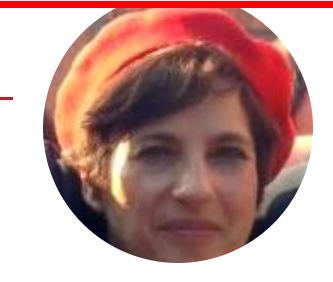
Ég hef birt hér á síðunni allnokkra pistla Söruh Glynn, en hún starfar að málefnum Kúrda í Strassborg. Í þessum pistlum greinir hún stöðu Kúrda í Tyrklandi, Sýrlandi, Íran og Írak. Sarah Glynn hefur einstakt lag á því að koma mörgu til skila í fáum orðum.
Listen to Sarah Glynn reporting on the thorny peace process the Kurds have initiated with the Erdogan government. Use the following link for the written word and spoken:
“Strengthening National Solidarity and Social Integration” – a milestone in the PKK/Turkey peace process
The long-anticipated Framework Law for the dissolution of the PKK was today brought before the Turkish Parliament. It has the signed support of DEM Party leaders, and the government majority would anyway ensure its acceptance into law. The main opposition leader, Özgur Özel, has also said he will support the bill.
Whether this is seen simply as the end of an era of armed resistance, or – as Abullah Öcalan and the DEM Party portray it – the first step on a new democratic trajectory, will depend not only on political preference but also on the power politics within Turkey and the wider region. Under current conditions, it is difficult to be optimistic. A Bill for Strengthening National Solidarity and Social Integration, as it is titled, can sit easily within an authoritarian agenda, even if the DEM Party doesn’t interpret it that way.
The scope of the bill, whose details have now been published, is limited to the reintegration into civilian life of PKK members and others convicted or accused of PKK involvement or support. This is premised on the complete disarming of the PKK’s military capacity, to be certified by the Turkish government. Individuals then have six months to apply for a form of parole lasting five or ten years, depending on whether their sentence is for less or more than fifteen years. All those accused of “intentional homicide committed within the framework of organisational activities,” as well as of “crimes committed before 1 June 2005 that require life imprisonment or aggravated life imprisonment” are excluded from applying.
Notably, the draft bill makes no mention of Öcalan, whose interaction with the outside world continues to be restricted and tightly monitored in defiance of Kurdish red lines, nor does it allow for any changes that might promote democracy or Kurdish cultural rights.
More questions than answers
Despite the long wait, and even within its limits, this bill raises many more questions than it answers.
Most obviously, what guarantees do PKK fighters have in Turkey once they have given up their weapons? Or political refugees if they return? The long history of PKK peace negotiations is full of examples of the Turkish state backtracking on their promises, including Recep Tayyip Erdoğan’s complete denial of the existence of the Dolmabahçe Agreement in 2015. Breaking agreements with impunity is increasingly becoming an accepted international norm.
Less brazenly, if PKK fighters or released prisoners are effectively on parole and restricted in their activities, it would be relatively easy to find an excuse to arrest (or re-arrest) them.
Even if this all functions as promised, there is no guarantee that any of the further changes being discussed would follow – that there will be any later stages.
The gestation of this bill has been very far from the open and shared process that Öcalan and the DEM Party had demanded. By insisting on parliamentary involvement, they had hoped to prevent a situation as in 2015, where all depended on the government; but parliament is being presented with a fait accompli. The execution of the process will be by government ministers; and the judiciary, whose role is vital to its success, have been systematically deprived of their independence and credibility.
Importantly, while the Kurds continue to insist on the inseparability of peace and democracy, this bill has emerged alongside an enhanced clampdown on democracy in Turkey. The DEM Party has been outspoken in their criticism of these attacks, but their focus on the peace process has actually complicated more active resistance.
For the main opposition, Özel has also made clear his party’s criticism of the closed and secretive process and the failure to address the fundamental issue of democracy.
The Turkish state holds the cards
It is clear that Öcalan and the PKK want to dissolve the organisation as a military force. They have recognised that, while they have proved their ability to hold out deep in the mountains, this was not advancing their cause. And armed struggle can only be justified if effective. The Turkish state knows they are talking to people who want to stop fighting.
The PKK’s recognition of the limits of their effectiveness is not just a result of new technical developments, such as drones, that make traditional guerrilla warfare much harder. They also suffered a setback in the urban wars of 2015-16, when PKK fighters attempted to enforce genuine autonomy in the Kurdish cities of Eastern Turkey. The Turkish state responded with massive and brutal military force, destroying lives, homes, heritage, and hopes. This little-written-about disaster demonstrated the limits of PKK power and cost them considerable support.
Since Ocalan’s statement in February 2025, which launched this current phase of peace talks after his nearly four years of government-enforced total isolation, global politics has only made the PKK’s hand weaker. Back then, the Kurdish-led Autonomous Administration and their Syrian Democratic Forces still controlled a large part of Syria, and even while Ocalan underlined his continued criticism of Israel, there was a belief that the counterweight of Israeli interference in Syria would benefit the Kurds. This belief was dispelled by the agreement made in Paris between Turkey and Israel that preceded Al-Sharaa’s military offensive and the effective end of Kurdish independent control in Syria.
Turkey has also been able to strengthen their importance across the Middle East more generally, and at the same time, the war in Ukraine has increased Turkey’s importance to NATO. While their pursuit of external strength has made the Turkish government more desirous of internal peace, their international impunity has become greater than ever before.
As few concessions as possible
The Turkish government has a strong hand and is playing it to ensure that they make the minimum of concessions to the PKK and the Kurds – in line with what they have always describes as their “terrorism-free Turkey” agenda – and that opposition parties are completely sidelined. The government has no incentive to make this look like anything other than a defeat for the PKK. They would be happy to see Öcalan discredited and the Kurds divided among themselves. Öcalan and the DEM Party have been left trying to present this bill as a first step towards a more democratic Turkey while democracy is being trampled on.
In line with their general approach, the Turkish state has done nothing to build confidence and even continues defying the demands of the European Court of Human Rights.
Erdoğan is determined that this time it is he who will benefit from any peace dividend – unlike in the 2015 election where the prospect of peace helped the HDP (the DEM Party’s predecessor) to deprive him of his overall majority. Any strengthening of Erdoğan’s power would be another disaster for democracy.
The terrorism-free Turkey framework doesn’t encourage any turn away from anti-Kurdish prejudice. A century of prejudice needs to be actively dismantled. Ending the fighting doesn’t eliminate the problems that caused it in the first place.
What next?
The end of a war that had no prospect of succeeding is of itself a cause for celebration, but we must be careful not to portray this agreement as more than it is. Raising expectations of democracy risks generating disappointment and loss of credibility. The road to democracy will have to involve massive struggle that extends well beyond the Kurdish movement. And only with democracy can attention return to those other political changes that the Kurdish Movement has been working for: women’s rights, minority rights, greater local autonomy, environmental concerns. There is a steep and rocky road ahead, and the Turkish state will continue to do what it can to prevent both Kurds and Turks from passing through it.
Sarah Glynn
Strasbourg 5 August 2026
Á eftirfarandi slóð má komast inn á síðu með safni undangenginna greina.
Here you can approach earlier reports:
https://newsfromkurdistan.wordpress.com/
--------------
Athygli er vakin á því að hægt er að gerast áskrifandi að fréttabréfi þessarar heimasíðu á slóð sem hér er að finna: https://www.ogmundur.is/
Fréttabréfið er sent aðeins endrum og eins til áskrifenda þeim að kostnaðarlausu að sjálfsögðu.
Here you can subscribe to a newsletter from this homepage, free of charge of course: https://www.ogmundur.is/
(Ábending: Margir þeirra sem hafa viljað skrá sig á útsendingarlista fréttabréfsins hafa orðið fyrir því að fá ekkert viðbragð eftir skráningu. Skýringin hefur oftar en ekki verið sú pósturinn hefur hafnað í ruslpósti. Fólk gæti að þessu.
To be taken note of: Sometimes people who have wanted to subscribe to the news-letter (by pressing skrá netfang and by then giving their e-mail, netfangið þitt) have not got any confirmation. Usually this is because the reply has been directed to the trash bin. Be aware of this.)