
ALÞJÓÐASAMFÉLAGIÐ VERÐUR AÐ BEITA SÉR – INTERNATIONAL PRESSURE IS IMPERATIVE.
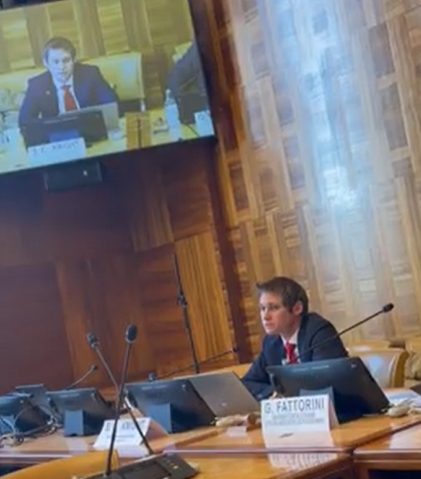
Á sérstökum hliðarfundi sem boðað var til á vegnum Mannréttindanefndar Sameinuðu þjóðanna í Genf í dag um mannréttindabrot á hendur Kúrdum í Tyrlakandi og Sýrlandi, kynnti breski lögmaðurinn Sephen Knight fyrstu niðurstöður rannsóknarnefndar sem nýkomin er fá Rojava, Kúrdahéruðum í norðaustanverðu Sýrlandi. Nefndin var þar að störfum í síðustu viku að afla gagna um stöðu mannréttinda.
Rannsóknarnenfdin, sem samanstóð af sérfræðingum í réttarmeinafræði og aljþóðarétti, mun birta niðurstöður sínar innnan fáeinna vikna. Ég var í för með nefndinni og hafði það verkefni meðan á sendiförinni stóð að tala opinberlega fyrir hennar hönd.
Á mínúntu 0:42 hefur Stephen Knight mál sitt og mæli ég með því að lesendur hlusti á hvað hann hefur að segja í áhrifaríkri frásögn sinn. Hann hefur mál sitt á því að hafa eftir orð eins fjölmargra vitna sem rætt var við í ferðinni. https://youtube.com/watch?v=6Hvtd_aH4nU&si=nt2YDys36RznbojO
Hér að neðan má einnig lesa orð Stephens Knigh.
Stephen Knight in Geneva today reporting on a fact finding tour of Rojava by experts in law and fore nsic medicine.
“I was working as an artist. I went to visit family in Aleppo, then the attacks began, and I stayed there. The third attack, on 11 January 2026, was the most difficult. Everyone suffered. It was a siege around us – before they attacked there was no food, no water, nothing people needed for life. Many children, old people, and families in winter were under blankets without heaters or food. For 7 days we had no food, electricity, diesel: we could not warm ourselves or eat.
They told us there would be a humanitarian corridor. Told us that in front of the hospital we would wait for the busses. We went there and stayed 6 or 7 hours. In that time they were still attacking us, hitting us, slowly getting closer to us. I saw a pregnant woman hit with shrapnel, a one-year-old child dead. We hid in houses and shops nearby.
While we were in the houses and shops, there were 3 drone attacks, three people were injured, two lightly and one very heavy. I think we left the injured man behind us. Everyone was just trying to save themselves.
About 6 pm we decided to get out to go somewhere safer: we decided to go to the hospital, because it is known around the world that a hospital should be the safest place. We were lowering ourselves, walking slowly, shouting “we are civilians”; at the time hundreds of bullets were flying over our heads. Among hundreds of people, many were injured, so many were shouting in pain.
The hospital was already full with dead or injured. Around 9-10pm they took over the neighbourhood. At that time I was really sick with a virus, my kidney started to hurt so I asked for water – but they had bombed the water tanks; children were crying asking for water but they had cut everything. Suicide drones were hitting the roof. Some parts of the roof were destroyed, falling on the people.
They brought buses nearby. Around 200 metres away around 4,000 to 5,000 fighters were pointing their weapons at us. The fighters spoke with Algerian and Moroccan accents, and others also spoke Turkish. On their uniforms they had the new Syrian flag.
When we went to the buses they were searching us. While searching, they were insulting us, and hitting people with weapons. They said, “you are dogs, from the SDF, we are going to step on you”.”
Those are the words of a man who survived the last days of the siege of the Sheikh Maqsood neighbourhood of Aleppo carried out by militias of the Syrian Transitional Government. I met him last week, in the course of a jurists’ delegation to North and East Syria coordinated by MAF-DAD, investigating the recent allegations of serious violations of international norms by the Syrian and Turkish governments in the past 2 months.
At the start of this year the Syrian Transitional Government under the control of Hayat Tahrir Al-Sham, an offshoot of Al-Qaida, attacked Kurdish neighbourhoods in Aleppo, and then attacked communities across North and East Syria. It has since established control over a large swathe of territory and population that had previously been under the control of the Democratic Autonomous Administration of the North and East Syria Region, a plurinational entity which controlled all of the territory north of the Euphrates, except for a strip of land occupied by Turkey.
Our jurists’ delegation spent last week in North and East Syria, taking testimony from civilian witnesses and medical workers, and reviewing medical records. We also spoke to local lawyers, to human rights defenders, and to representatives of displaced people and autonomous women’s structures, and had access to accounts collected from dozens of other witnesses. These oral accounts and documentation have been triangulated with open source material regarding violations, most prominently videos and photographs of violations uploaded to social media platforms by perpetrators. Our evidence gathering and analysis continues, but some themes have begun to emerge.
In brief overview, attacks on civilians and prisoners began in the Sheikh Maqsood and Ashrafieh neighbourhoods of Aleppo last year, when it was placed under siege by the Syrian Transitional Government. That siege continued until 11 January of this year, with multiple attacks against civilians and civilian objects including hospitals having taken place at that time. On 10 and 11 January there are detailed reports of the murder of surrendered and unarmed local police officers by forces under the control of the Syrian Transitional Government.
Following the Syrian Transitional Government’s takeover of Sheikh Maqsoud and Ashrafiyeh, hundreds of military-age men - as well as some women and children - were taken prisoner, with no attempt to distinguish civilians from fighters. Videos of these incidents show some prisoners being forced to repeat degrading chants, and being hit. While some of those arrested were later released, the whereabouts of many others remain unknown.
After the besieged areas of Aleppo were evacuated, Kurdish civilians came under threat in the cities of Tabqa and Raqqa and fled. During their flight, civilian convoys were systematically attacked by tribal militias allied to the Syrian Transitional Government. At checkpoints established by fighters allied with the Syrian Transitional Government, multiple witnesses described systematic extrajudicial killings.
Throughout these violations there were consistent reports of racist, anti-Kurdish insults being used by combatants on the side of the Syrian Transitional Government.
The murder of prisoners was a consistent theme throughout the evidence gathered so far. Surrendered fighters of the Syrian Democratic Forces were routinely murdered by militias linked to the Syrian Transitional Government during the flight from Tabqa and Raqqa to Heseke. Both in Aleppo, and on the road from Raqqa to Heseke, the desecration of the corpses of Syrian Democratic Forces fighters has been recorded. Additionally, there have been well-documented instances of graveyards being desecrated by fighters aligned with the Syrian Transitional Government.
The flight of a significant population from Aleppo, Tabqa, and Raqqa has provided an opportunity for significant looting to be carried out by forces aligned with the Syrian Transitional Government. In the case of one resident of Raqqa who I interviewed, her home had been stolen by a member of the so-called Islamic State during its occupation of the city. After the city was liberated by the Syrian Democratic Forces in 2017, she was able to move back to her home, and lived there until January of this year. After she fled the city, her home was again occupied by the same person, this time affiliated with the Syrian Transitional Government.
Interviewees and extensive open source material from social media have shown that ethnic animosity has played a significant role in the violence against prisoners and civilians. Interviewees repeatedly refer to being asked their ethnicity at checkpoints staffed by the Syrian Transitional Government’s militias. Kurdish people who admitted their ethnicity then faced discriminatory violence, including in many cases murder. Those who were Arabs or who could pass as Arabs did not face the same treatment. Even those who did not face instances of violence, nonetheless faced racialised insults.
Finally, the military advances of the Syrian Transitional Government have been characterised by systematic gender-based violence. One of the pillars of the DAA since its establishment in the early days of the Syrian crisis has been radical gender emancipatory politics. Within the DAA structures women are guaranteed 50% of elected positions, all individual chairs of councils are held jointly by a man and a woman, and autonomous women’s structures have been developed. The financial regulations of the DAA guarantee at least 1% of all cantonal and municipal budgets go to the autonomous women’s structures. An autonomous women’s militia, the Women’s Protection Forces or YPJ, is a central core of the Syrian Democratic Forces, the military of the DAA. Outside of the bounds of the YPJ, women play prominent roles in policing and in the self-defence of communities.
These advances in women’s rights have been a focal point for the violence of the militias tied to the Syrian Transitional Government. One case that was widely documented is that of a government fighter, Rami al-Dash, who cut and displayed the braid of a YPJ fighter as a trophy. In the video al-Dash implies that he has already killed her. Separately, videos appear to show captured members of the YPJ being insulted, beaten, and threatened to be sold or “given” to higher commanders.
Women in the autonomous women’s structures with whom we spoke described the physical destruction of the women’s institutions that had been built in Aleppo and Raqqa. Their libraries have been intentionally destroyed and their buildings taken over by the new occupying powers.
That brings me to the situation today. Currently there are hundreds of thousands of internally displaced people within the areas of North and East Syria which remain under the control of the DAA. Of those, a significant proportion have suffered multiple displacement, beginning with the 2018 Turkish invasion of Afrîn, and then displacement from IDP camps. Many of the displaced families are sheltering in schools, all of which in the region have been converted to accommodate displaced families. Despite the best efforts of the administration and of the families living there, conditions in the schools are unsanitary, as the schools are not designed for habitation and have insufficient food preparation and sanitation facilities. One family I spoke to, in the classroom that formed their temporary home, described the adults staying awake at night to prevent rats biting their children in their sleep. Even within the schools, shelter is lacking, and the nights in Northern Syria are bitterly cold. Families are relying for basic necessities on support provided by the DAA, alongside the Kurdish Red Crescent.
There are currently no active hostilities between the SDF and the forces of the STG. However, the city of Kobanê though remains under siege. Many people will remember Kobanê as the place in which DAESH received its first defeat, at the hands of the Kurdish militias which went on to form the basis of the SDF. I was unable to speak to anyone in Kobanê due to the siege conditions imposed by the STG and Turkey, which include the prevention of mobile communications access. Reports indicate that the humanitarian situation in Kobanê is continuing to deteriorate, with insufficient access to healthcare and baby formula, among other privations for the civilian population caused by the siege.
As I noted, work on data collection and analysis from our delegation continues. We will have a report available in the coming weeks, analysing the attacks on North and East Syria since the beginning of this year. It is imperative that the world opens its eyes to what is currently occurring and monitors reports emerging from the region. Multiple people we spoke to informed us that the end of the STG’s advance and the stabilisation that followed, came about in part as a result of the international pressure placed on the STG by other states, which in turn was generated at least in part by civil society organising. That is a testament to the work of many people around the world in seeking to protect the people of North and East Syria, and demonstrates how vital it is that human rights bodies, including UN bodies, play close attention to North and East Syria at this critical time.
Thank you, and thank you to our chair and to my fellow speakers.
----------------------------------
Athygli er vakin á því að hægt er að gerast áskrifandi að fréttabréfi þessarar heimasíðu á slóð sem hér er að finna: https://www.ogmundur.is/
Fréttabréfið er sent aðeins endrum og eins til áskrifenda þeim að kostnaðarlausu að sjálfsögðu.
Here you can subscribe to a newsletter from this homepage, free of charge of course: https://www.ogmundur.is/
(Ábending: Margir þeirra sem hafa viljað skrá sig á útsendingarlista fréttabréfsins hafa orðið fyrir því að fá ekkert viðbragð eftir skráningu. Skýringin hefur oftar en ekki verið sú pósturinn hefur hafnað í ruslpósti. Fólk gæti að þessu.
To be taken note of: Sometimes people who have wanted to subscribe to the news-letter (by pressing skrá netfang and by then giving their e-mail, netfangið þitt) have not got any confirmation. Usually this is because the reply has been directed to the trash bin. Be aware of this.)