

ALFRED DE ZAYAS UM ÓLÖGLEGAR REFSIAÐGERÐIR BNA OG ESB (in English)
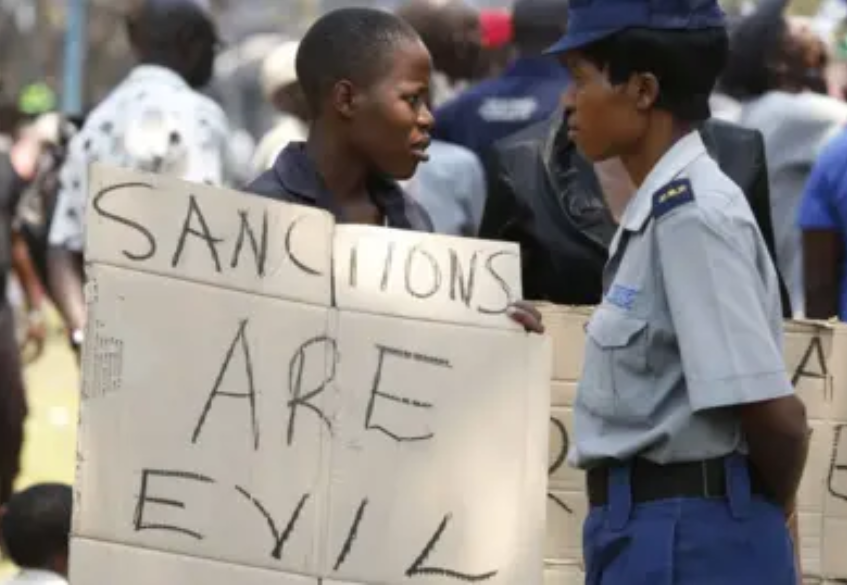
Fyrir tæpum mánuði birti Alfred de Zayas yfirgripsmikla grein í vefritinu Covert Action Magazine um hrikalegar afleiðingar efnahagslegra refsiaðgerða Bandaríkjanna og Evrópusambandsins gegn ríkjum sem ekki láta að stjórn þeirra.
Í grein sinni vísar Alfred de Zayas ítarlega í gögn og má þar nefna að breska læknaritið Lancet ætli að á ári hverju deyi um hálf milljón manna af völdum refsiaðgerða þessara ríkja; refsiaðgerða sem allar eru ólöglegar samkvæmt alþjóðalögum.
Í grein sinni fer Alfred de Zayas í saumana á pólitískum afleiðingum þeirra þrenginga sem refsiðagerðirnar skapa en þær ýti undir valdníðslu af hálfu stjórnvalda og grafi undan mannréttindum í ríkjunum sem aðgerðunum er beint að.
Þá ræðir hann ofsóknir á hendur einstaklingum sem gagnrýna utanríkisstefnu Evrópusambandsins og hvernig ofsóknirnar eru beinlínis hannaðar með það fyrir augum að skapa fylgispekt við utanríkis- og öryggismálastefnu sambandsins.
Um allt þetta mun ég síðar fjalla betur um en læt hér fylgja frábæra greiningu Alfreds de Zayas.
Kjarninn í málflutningi hans er sá að sýna fram á glæpsamlegt eðli þvingunaraðgerðanna en jafnframt bendir hann á mikilvægi þess að leysa alþjóðleg deilumál á opnum vettvangi friðsamlegra samskipta.
THE POTENTIAL OF DIPLOMATIC PROTECTION AS A FOREIGN POLICY TOOL TO COUNTER ECONOMIC SANCTIONS, FINANCIAL BLOCKADES AND OTHER UNILATERAL COERCIVE MEASURES
By Alfred de Zayas
Introduction
In the light of the proliferation of unilateral coercive measures (UCMs) and the adverse human rights impacts they generate worldwide[1], the question arises what measures States can and should adopt to counter the UCM plague. One obvious foreign policy tool that remains under-utilized is that of diplomatic protection of individuals and corporations impacted by UCMs. Diplomatic protection can be exercised in many ways, e.g. through diplomatic protests, retorsion, counter-measures, arbitration and adjudication by international courts and tribunals.
In the light of yearly UN General Assembly and UN Human Rights Council resolutions condemning UCMs, and considering the growing number of scholarly studies and reports documenting the death and devastation caused by UCMs[2], it is hard to understand why affected States have not organized to push back against this lawlessness, why the BRICS[3] countries, the Shanghai Cooperation Organization[4] States, the “global South” countries have not joined forces to contest the legality of UCMs before the International Court of Justice (ICJ), the International Criminal Court (ICC) as well as international and regional judicial and quasi-judicial instances, including the Human Rights Committee (HRC), the Committee on Economic, Social and Cultural Rights (CESCR), the European Court of Human Rights (ECtHR)[5], the Inter-American Court of Human Rights (IACtHR), the African Court on Human and Peoples Rights (AfCHPR)[6], which have both inter-State[7] and individual complaints procedures.
This essay submits that dozens of countries affected by UCMs should exercise diplomatic protection not only to defend the rights of their subjects, but to vindicate their sovereignty and demand reparation for the violation of the principle of non-intervention in their internal affairs through the extra-territorial application of foreign laws. They should document and quantify the systematic violation of the human rights of their subjects to demonstrate that UCMs are incompatible with human rights treaties, both universal and regional, ratified by the States imposing UCMs, and more generally are contrary to the principles and purposes of the UN Charter and civilization.
Researchers have documented the devastating impacts of UCMs on one third of the population of the planet[8], which every year have caused, according to an expert study published in the British medical journal The Lancet[9], an estimated half a million deaths worldwide. Undoubtedly this constitutes a crime against humanity.
A separate study on UCMs as a form of unlawful collective punishment concerns the hybrid economic war and draconian measures, including financial blockades, adopted by the US against Venezuela. The study by Professor Jeffrey Sachs (Columbia) and Dr. Marc Weisbrot of the Center for Economic and Policy Research in Washington, D.C., concluded that for the year 2018 alone, 40.000 deaths in Venezuela could be attributable to the adverse impacts of UCMs on nutrition and health[10].
Besides death, illness and malnutrition, UCMs generate distressing economic, social and cultural impacts. UCMs have destroyed supply chains and voided the benefits of globalization, led to bankruptcies, unemployment, increased corruption associated with black markets, triggered uncontrolled flows of economic migration and triggered humanitarian crises. All of these violations of international law and human rights are justiciable before national and international instances.
While UCMs entail massive interference in the internal affairs of sovereign States and are incompatible with pertinent General Assembly Resolutions, including 2131 and 2625 (The Declaration on Friendly Relations), a number of states have actually intensified their UCMs practices, attempting to justify them with a variety of easily rebuttable pretexts such as retorsion. As shown by statements of US government officials and others, the real purpose of UCMs has always been geopolitical, to cause chaos, destabilise and “punish” countries that assert their independence and do not bow to the dictates from Washington and Brussels.
The prohibition of interference in the internal affairs is summarized in General Assembly Resolution 2625:
“No State or group of States has the right to intervene, directly or indirectly, for any reason whatever, in the internal or external affairs of any other State. Consequently, armed intervention and all other forms of interference or attempted threats against the personality of the State or against its political, economic and cultural elements, are in violation of international law.
No State may use or encourage the use of economic political or any other type of measures to coerce another State in order to obtain from it the subordination of the exercise of its sovereign rights and to secure from it advantages of any kind. Also, no State shall organize, assist, foment, finance, incite or tolerate subversive, terrorist or armed activities directed towards the violent overthrow of the regime of another State, or interfere in civil strife in another State.
The use of force to deprive peoples of their national identity constitutes a violation of their inalienable rights and of the principle of non-intervention.
Every State has an inalienable right to choose its political, economic, social and cultural systems, without interference in any form by another State.”[11]
As scholarly research demonstrates, UCMs constitute the “use of force”, prohibited in article 2(4) of the UN Charter, which does NOT limit its scope to “military” force. Whenever the drafters of the Charter meant “armed force” (Preamble, Arts. 41, 46), they said so, when they meant “military measures”, they said so (Art 45), when they meant “armed attack”(Art. 51) as well. In the absence of the adjective “armed” or “military”, force means any kind of force, including non-conventional, hybrid measures such as UCMs.
Empirical research has also revealed that UCMs have been largely ineffective in imposing “regime change” or encouraging changes in the policies of the targeted countries, but instead have caused enormous human suffering. Moreover, in many cases UCMs have proven counter-productive, hurting not only the economies of the targeted countries, but also those of the states that impose them.
Moreover, precisely because UCMs are intended to destabilize targeted States, these States end up devising survivalist strategies, which frequently entail restricting civil and political rights, including freedom of expression, freedom of the media, the right of peaceful assembly, and the right of association. In chapter 6 of Professor Douhan’s book Humanitarian Impact of Unilateral Coercive Measures, I elaborated on the negative impact of UCMs on civil and political rights. In Chapter 11 of Professor Douhan’s essential book Sanctions, Business and Human Rights, Michael Swainston K.C. delivered an insightful analysis of these issues.[12]
The Law of Diplomatic Protection
As we know from customary international law, the idea that a state has a right to protect its subjects vis-à-vis other States is a given. It was already expressed in the 18th century by Emmerich de Vattel in his Treatise The Law of Nations:
“Whoever uses a citizen ill, indirectly offends the state, which is bound to protect this citizen; and the sovereign of the latter should avenge his wrongs, punish the aggressor, and, if possible, oblige him to make full reparation; since otherwise the citizen would not obtain the great end of the civil association, which is, safety.”[13]
The Permanent Court of International Justice and the International Court of Justice have concretized and expanded this doctrine.
In its famous Mavrommatis Judgment of 1924, the Permanent Court of International Justice summarized diplomatic protection as follows:
“It is an elementary principle of international law that a State is entitled to protect its subjects, when injured by acts contrary to international law committed by another State, from whom they have been unable to obtain satisfaction through the ordinary channels. By taking up the case of one of its subjects and by resorting to diplomatic action or international judicial proceedings on his behalf, a State is in reality asserting its own rights - its right to ensure, in the person of its subjects, respect for the rules of international law.”[14]
The above ruling has considerable relevance in the context of the struggle to abolish UCMs as a scourge on mankind. UCMs entail a revolt against the fundamental rules of international law. What is here at stake is the authority and credibility of the United Nations --and of international law.
In the 1927 Chorzow Factory Case[15], Germany espoused the rights of German subjects who had suffered discriminatory confiscations by Polish authorities in violation of the League of Nations Minorities Treaties[16]. The PCIJ ruled that Poland had indeed violated provisions of the pertinent Treaties and that it owed compensation to the victims. Germany’s diplomatic protection of German subjects was successful. Other pertinent diplomatic protection cases include the 1926 judgment in Certain German Interests in Upper Silesia case.[17]
The International Court of Justice, the successor of the PCIJ, expanded this principle in the Barcelona Traction case ruling that diplomatic protection can be exercised on behalf of corporations, besides individuals. It also elaborated the notion of obligations owed erga omnes (in relation to everyone) to the international community. Other significant cases concern human rights matters, e.g. the LaGrand v. United States case[18], the Avena v. United States case[19], both concerning failure of the US to abide by the Vienna Convention on Consular Relations and the imposition of the death penalty on two German nationals and on 51 Mexican nationals. Notwithstanding “provisional measures” issued by the court to prevent the execution of these German and Mexican citizens, the United States proceeded to execute the foreign nationals.
Concerning LaGrand judgment, Professor David Leys (Louvain) noted:
“In Lagrand, Germany approached the ICJ seeking to prevent the execution of the Lagrand brothers in the state of Arizona. Invoking international human rights conventions, Germany argued that the United States had neglected to inform the accused of their right to seek assistance from the German Consulate. Germany sought protective measures to obtain a more favorable treatment for the Lagrand brothers. In applying Article 31 of the Convention on the Law of Treaties of 1969, the ICJ deduced that the foreign state, in casu the United States, had obligations towards both the accused and their state of origin, Germany. The Court posited a two-pronged understanding of consular assistance; the right of a state to attend to its nationals when they are arrested or detained and the right of the individual to request assistance of his or her state of nationality. The Court noted that measures protecting the individual’s right are compulsory, although it did not specify the scope of this right. Nonetheless, it can be deduced from this jurisprudence that the ICJ indirectly recognized the function of protecting human rights as a component of diplomatic protection.[20]
The Individual in International Law
Originally, diplomatic protection was understood exclusively from the perspective of the sovereign State. The individual was seen as an object of international law, not as a subject of international law with rights and obligations, and, most importantly, with treaty-based human rights and standing to claim these rights before national and international human rights courts and tribunals such as the UN Human Rights Committee, the European Court of Human Rights, the Inter-American Court of Human Rights, the African Court of Peoples and Human Rights.
The recognition of the individual as a subject of international law constitutes a quantum step forward in the development of civilization. The principle ubi jus, ibi remedium (where there is law, there is also recourse and remedy) has acquired concrete meaning. Bearing in mind that law requires enforcement, States must advance this legal paradigm by a variety of foreign policy decisions, including the pro-active exercise of diplomatic protection.
International Law Commission
In 2006, the International Law Commission[21] adopted draft Articles on Diplomatic Protection, for regulating the entitlement and the exercise of diplomatic protection, largely codifying established practice.
Professor John Dugard (Leiden), ILC rapporteur, elaborated on the multiple facets of diplomatic protection in the relevant essay he published in the Max Planck Encyclopaedia of Public International Law, edited by Professor Rüdiger Wolfrum.
Dugard starts by proposing a definition “Under international law, a State is responsible for injury to an alien caused by that State’s wrongful act or omission. Diplomatic protection is the procedure employed by the State of nationality of the injured person to secure protection of that person, and to obtain reparation for the internationally wrongful act inflected. Such protection extends to both natural and legal persons.” [22]
Dugard adds further that “today it is accepted that diplomatic protection may only be enforced by peaceful means, such as negotiation, arbitration, or judicial proceedings and not by forcible means.”
Excerpts from the Draft ILC articles
Article 1 offers a working definition: “Diplomatic protection consists of the invocation by a State, through diplomatic action or other means of peaceful settlement, of the responsibility of another State for an injury caused by an internationally wrongful act of that State to a natural or legal person that is a national of the former State with a view to the implementation of such responsibility”.[23]
Article 2 reaffirms that “A State has the right to exercise diplomatic protection”; Article 3 stipulates “1. The State entitled to exercise diplomatic protection is the State of nationality. 2. Notwithstanding paragraph 1, diplomatic protection may be exercised by a State in respect of a person that is not its national in accordance with draft article 8.“
Article 4. « For the purposes of the diplomatic protection of a natural person, a State of nationality means a State whose nationality that person has acquired, in accordance with the law of that State, by birth, descent, naturalization, succession of States or in any other manner, not inconsistent with international law.”
Article 6: ”1. Any State of which a dual or multiple national is a national may exercise diplomatic protection in respect of that national against a State of which that person is not a national. 2. Two or more States of nationality may jointly exercise diplomatic protection in respect of a dual or multiple national.”
Article 8: “1. A State may exercise diplomatic protection in respect of a stateless person who, at the date of injury and at the date of the official presentation of the claim, is lawfully and habitually resident in that State. 2. A State may exercise diplomatic protection in respect of a person who is recognized as a refugee by that State, in accordance with internationally accepted standards, when that person, at the date of injury and at the date of the official presentation of the claim, is lawfully and habitually resident in that State.”
Article 9: “For the purposes of the diplomatic protection of a corporation, the State of nationality means the State under whose law the corporation was incorporated. However, when the corporation is controlled by nationals of another State or States and has no substantial business activities in the State of incorporation, and the seat of management and the financial control of the corporation are both located in another State, that State shall be regarded as the State of nationality.”
Article 10. ”1. A State is entitled to exercise diplomatic protection in respect of a corporation that was a national of that State, or its predecessor State, continuously from the date of injury to the date of the official presentation of the claim. Continuity is presumed if that nationality existed at both these dates. 2. A State is no longer entitled to exercise diplomatic protection in respect of a corporation that acquires the nationality of the State against which the claim is brought after the presentation of the claim. 3. Notwithstanding paragraph 1, a State continues to be entitled to exercise diplomatic protection in respect of a corporation which was its national at the date of injury and which, as the result of the injury, has ceased to exist according to the law of the State of incorporation.”
Article 11: “A State of nationality of shareholders in a corporation shall not be entitled to exercise diplomatic protection in respect of such shareholders in the case of an injury to the corporation unless: (a) the corporation has ceased to exist according to the law of the State of incorporation for a reason unrelated to the injury; or (b) the corporation had, at the date of injury, the nationality of the State alleged to be responsible for causing the injury, and incorporation in that State was required by it as a precondition for doing business there.”
Article 12: “To the extent that an internationally wrongful act of a State causes direct injury to the rights of shareholders as such, as distinct from those of the corporation itself, the State of nationality of any such shareholders is entitled to exercise diplomatic protection in respect of its nationals.”
Article 13: “The principles contained in this chapter shall be applicable, as appropriate, to the diplomatic protection of legal persons other than corporations.”
Article 14: “ 1. A State may not present an international claim in respect of an injury to a national or other person referred to in draft article 8 before the injured person has, subject to draft article 15, exhausted all local remedies. 2. “Local remedies” means legal remedies which are open to an injured person before the judicial or administrative courts or bodies, whether ordinary or special, of the State alleged to be responsible for causing the injury. 3. Local remedies shall be exhausted where an international claim, or request for a declaratory judgement related to the claim, is brought preponderantly on the basis of an injury to a national or other person referred to in draft article 8.”
Article 15: “Local remedies do not need to be exhausted where: (a) there are no reasonably available local remedies to provide effective redress, or the local remedies provide no reasonable possibility of such redress; (b) there is undue delay in the remedial process which is attributable to the State alleged to be responsible; (c) there was no relevant connection between the injured person and the State alleged to be responsible at the date of injury; (d) the injured person is manifestly precluded from pursuing local remedies; or (e) the State alleged to be responsible has waived the requirement that local remedies be exhausted.”
Article 16: “The rights of States, natural persons, legal persons or other entities to resort under international law to actions or procedures other than diplomatic protection to secure redress for injury suffered as a result of an internationally wrongful act, are not affected by the present draft articles.
Article 19 “A State entitled to exercise diplomatic protection according to the present draft articles, should: (a) give due consideration to the possibility of exercising diplomatic protection, especially when a significant injury has occurred; (b) take into account, wherever feasible, the views of injured persons with regard to resort to diplomatic protection and the reparation to be sought; and (c) transfer to the injured person any compensation obtained for the injury from the responsible State subject to any reasonable deductions.”
Recent ICJ jurisprudence built on the concept of diplomatic protection
In its 1980 judgment in the United States Diplomatic and Consular Staff in Teheran case[24], the ICJ decided that: “the Islamic Republic of Iran, by the conduct which the Court has set out in this Judgment, has violated in several respects, and is still violating, obligations owed by it to the United States of America under international conventions in force between the two countries, as well as under long-established rules of general international law…[2] that the violations of these obligations engage the responsibility of the Islamic Republic of Iran towards the United States of America under international law…[3] that the Government of the Islamic Republic of Iran must immediately take all steps to redress the situation resulting from the events of 4 November 1979 and what followed from these events…”
In the ICJ case Certain Iranian Assets (Islamic Republic of Iran v. United States of America) case[25], Iran represented its own rights and the rights of its citizens, corporations and banks affected by unilateral US decrees. In its 2023 judgment the Court held that the United States of America has violated its obligation under Article III, paragraph 1, of the 1955 Treaty of Amity, Economic Relations, and Consular Rights… and… that the United States of America has violated its obligations under Article IV, paragraph 1, of the 1955 Treaty of Amity, Economic Relations, and Consular Rights…and that the United States of America has violated its obligation under Article IV, paragraph 2, of the 1955 Treaty of Amity, Economic Relations, and Consular Rights, namely that the property of nationals and companies of the Contracting Parties “shall not be taken except for a public purpose, nor shall it be taken without the prompt payment of just compensation… and that the United States of America has violated its obligations under Article X, paragraph 1, of the 1955 Treaty of Amity, Economic Relations, and Consular Rights … and that the United States of America is under obligation to compensate the Islamic Republic of Iran for the injurious consequences of the violations of international obligations referred to in subparagraphs (3) to (6) above…”
In the 2012 judgment in Ahmadou Sadio Diallo (2012)[26], the ICJ held that “in respect of the circumstances in which Mr. Diallo was expelled from Congolese territory on 31 January 1996, the Democratic Republic of the Congo violated Article 13 of the International Covenant on Civil and Political Rights and Article 12, paragraph 4, of the African Charter on Human and Peoples’ Rights… that in respect of the circumstances in which Mr. Diallo was arrested and detained in 1995-1996 with a view to his expulsion, the Democratic Republic of the Congo violated Article 9, paragraphs 1 and 2, of the International Covenant on Civil and Political Rights and Article 6 of the African Charter on Human and Peoples’ Right… that, by not informing Mr. Diallo without delay, upon his detention in 1995-1996, of his rights under Article 36, paragraph 1 (b), of the Vienna Convention on Consular Relations, the Democratic Republic of the Congo violated the obligations incumbent upon it under that subparagraph,,,”
In a separate opinion Judge Cançado Trindade, notes “that ours are the times of a new jus gentium, focused on the rights of the human person, individually or collectively. Much to the credit of both Guinea and the D.R. Congo, the ICJ has been called upon, in the course of the proceedings on the merits, to settle a dispute on the basis of two human rights treaties and a relevant provision of a UN codification Convention. In respect of the merits (and reparation), this became a case pertaining to human rights protection. Diplomatic protection was the means whereby the complaint was originally lodged with the Court. Yet, once diplomatic protection, ineluctably discretionary in character, played its instrumental role, the case before the Court became substantively one pertaining to human rights protection….Judge Trindade further highlighted “that both the European and the Inter-American Courts of Human Rights have rightly set limits to State voluntarism, have safeguarded the integrity of the respective human rights Conventions and the primacy of considerations of ordre public over the “will” of individual States, have set higher standards of State behaviour and established some degree of control over the interposition of undue restrictions by States, and have reassuringly enhanced the position of individuals as subjects of the International Law of Human Rights, with full procedural capacity. The two international human rights Tribunals have aptly made use of the techniques of Public International Law in order to strengthen their respective jurisdictions of protection of the human person. As to substantive law, the contribution of the two international human rights Courts to this effect is illustrated by numerous examples of their respective case-law pertaining to the rights protected under the two regional Conventions.”
These judicial ruminations have implications for the relevance of diplomatic protection today and the growing importance of asserting human rights through diplomatic protection and ICJ adjudication.
Indeed, if States affected by UCMs were to challenge the legality of UCMs before the ICJ, focusing on the obvious violations of multiple articles of the ICCPR, ICESCR, CRC, ECHR etc, the ICJ would have no option but to rely on its own precedents and explicitly condemn UCMs as contrary to the UN Charter and fundamental principles of international law.
Jurisprudence of the European Court of Human Rights
The ECtHR judgment of 10 May 2001 in the case Cyprus v. Turkey[27] can be used as a model for inter-state complaints against European states that impose UCMs. In the Cyprus judgment the Court held inter-alia that:
“there has been a continuing violation of Article 2 of the Convention on account of the failure of the authorities of the respondent State to conduct an effective investigation into the whereabouts and fate of Greek-Cypriot missing persons who disappeared in life-threatening circumstances (paragraph 136)…
“there has been a continuing violation of Article 5 of the Convention by virtue of the failure of the authorities of the respondent State to conduct an effective investigation into the whereabouts and fate of the Greek-Cypriot missing persons in respect of whom there is an arguable claim that they were in Turkish custody at the time of their disappearance (paragraph 150)…
“there has been a continuing violation of Article 3 of the Convention in respect of the relatives of the Greek-Cypriot missing persons (paragraph 158)…
“there has been a continuing violation of Article 8 of the Convention by reason of the refusal to allow the return of any Greek-Cypriot displaced persons to their homes in northern Cyprus (paragraph 175)…
“there has been a continuing violation of Article 1 of Protocol No. 1 by virtue of the fact that Greek-Cypriot owners of property in northern Cyprus are being denied access to and control, use and enjoyment of their property as well as any compensation for the interference with their property rights (paragraph 189)…
“there has been a violation of Article 13 of the Convention by reason of the failure to provide to Greek Cypriots not residing in northern Cyprus any remedies to contest interferences with their rights under Article 8 of the Convention and Article 1 of Protocol No. 1 (paragraph 194)…”
Possible action in the Inter-American Court of Human Rights[28]
The OAS Charter is unambiguous in its condemnation of foreign pressure to force sovereign States to change their policies. In appropriate cases, States targeted by UCMs and whose citizens have suffered under the illegal measures should invoke Articles 19 and 20 of the Charter, which stipulate:
“19. No State or group of States has the right to intervene, directly or indirectly, for any reason whatever, in the internal or external affairs of any other State. The foregoing principle prohibits not only armed force but also any other form of interference or attempted threat against the personality of the State or against its political, economic, and cultural elements.
Article 20
No State may use or encourage the use of coercive measures of an economic or political character in order to force the sovereign will of another State and obtain from it advantages of any kind.”[29].
Yet, this author does not know of any case before the IACHR challenging UCMs against Cuba, Nicaragua or Venezuela, etc.
China deploys diplomatic protection on behalf of Huawei’s chief financial officer, detained in Canada
In December 2018, Ms Meng Wanzhou, deputy chairperson of Huawei, the Chinese multinational technology corporation, was detained at Vancouver International Airport for questioning, which lasted three hours. She was subsequently arrested on a provisional US extradition request concerning evasion of US UCMs against Iran. In January 2019, the US brought charges against Wanzhou and the first extradition hearing followed, which only concluded in May 2020, when the Supreme Court of British Columbia ordered the extradition to proceed, notwithstanding the submissions by Meng’s lawyers concerning the unlawful detention of Meng, unlawful search and seizure, extradition law violations and other violations of international law. Meng was released from house arrest and returned to China in September 2021. The BBC reported: “In 2019, the US imposed sanctions on Huawei and placed it on an export blacklist, cutting it off from key technologies. The UK, Sweden, Australia and Japan have also banned Huawei, while other countries including France and India have adopted measures stopping short of an outright ban.A few days after Ms Meng was arrested, China detained two Canadian citizens, Michael Spavor and Michael Kovrig, on suspicion of spying. Critics have accused China of treating them as political bargaining chips, held as part of what is known as ‘hostage diplomacy’. China denies this. Last month, a Chinese court convicted Michael Spavor, a businessman, of espionage and sentenced him to 11 years in prison.[30]
There was much backdoor diplomacy and very little genuine diplomacy, although the Huawei case would have been a perfect occasion to further develop the utility of diplomatic protection through international adjudication.
Violations of human rights treaties require resolute push-back from States, including through diplomatic protection
Because of the erga omnes character of human rights treaties, all states have a legitimate interest in defending the principle of human dignity and the necessity to ensure that all States parties to the ICCPR, ICESCR, ICERD, CRC are enforced worldwide and that obstacles to their implementation, such as UCMs, are removed. This erga omnes obligation of States encompasses effective support of persons under their jurisdiction, including by opening contentious cases before international courts and expert committees, and by assisting victims in submitting cases where individuals have standing. Where individuals have no standing (e.g. before the ICJ and ICC), it is the State that should use all international instances to vindicate the human rights of their subjects.
Among the violations of the ICCPR that both targeted and comprehensive UCMs may entail are:
Art. 1, the self-determination of peoples and the prohibition of depriving them of sustenance
Art. 2 , the right to recourse and remedy
Art. 6, the right to life, bearing in mind that hundreds of thousands of innocent persons have died as a consequence of UCMs
Art. 9, arbitrary arrest and detention, e.g. the detention of Julian Assange (determined to constitute arbitrary detention by the WG on Detention[31], and confirmed by the Independent Expert on International Order[32]), of the CEO of Huawei, the right to compensation for arbitrary detention
Art. 10, inhumane conditions of detention
Art. 12, freedom of movement
Art. 14, the right to a fair hearing before an independent tribunal, presumption of innocence, right to access to counsel, right to appeal, right to reparation; UCMs are nominally administrative but penal in character without the safeguards provided for criminal procedures,
Art.15, nullum crimen sine lege, nulla poena sine lege. UCMs are based on decrees, not laws, and impact the targeted person without the pre-warning of an existing law. The victim has no clue why he/she is being “punished”, because there has been no warning, only an ex post facto decree, or the arbitrary inclusion in a “sanctions list”,
Art. 16, right to recognition as a person before the law [33]; an individual under US or EU sanctions is placed in legal limbo and deprived of recourse and remedy,
Art.17, interference with privacy and family life, right to honour and reputation,
Ar.t 18, right to hold beliefs and convictions,
Art. 19, freedom of opinion and expression, freedom of the media, access to information,
Art. 21, right of peaceful assembly,
Art. 22, freedom of association,
Art. 23, right to marry and family life,
Art. 24, rights of the child,
Art. 25, rights to participate in the conduct of public affairs,
Art. 26, prohibition of discrimination, e.g. for political opinion. Although there is no protection ratione materiae of the right to private property in the ICCPR, the HRC has adopted numerous judgements determining that the confiscation of private property violated article 26 when it occurred arbitrarily or discriminatorily, without due process and legitimate justification.
The evolution of diplomatic protection from a discretionary State option to a human right
Thanks to recent ICJ jurisprudence, the law on diplomatic protection has been evolving toward recognizing a State obligation to pro-actively assert human rights, especially in cases of crimes against humanity and genocide..
Although doctrine pretends that diplomatic protection is only “discretionary”, already Emmerich de Vattel postulated an obligation “Whoever uses a citizen ill, indirectly offends the state, which is bound to protect this citizen”. The reason for this obligation is the necessity to confer credibility to the law as a matter of civilization. Laws without implementation lose their authority. The whole system of law is weakened when the law can be violated with impunity. For this reason, every state has an interest erga omnes to see international law respected worldwide. This is necessary for what the Germans call Rechtssicherheit, the fact that one can rely on the validity of norms, that there is predictability in business and commercial relations, that we are not governed arbitrarily but according to the “rule of law” that will be enforced by appropriate State mechanisms. This Rechtssicherheit is also necessary for a peaceful international order.
Interim measures of protection
While diplomatic protection could be used in thousands of cases, States have failed to use this foreign policy tool effectively. Whenever a States brings a case before the ICJ, it should also consider asking for “interim measures of protection” or “provisional measures” under article 41 of the ICJ statute[34]. These interim measures are binding.
In numerous UCM cases, there would be irreparable damage unless the violation is immediately stopped. This is certainly the case with some US and EU sanctions that place the targeted person in legal limbo without recourse, and in cases of comprehensive UCMs, expose the populations to hunger, disease and ultimately to death. In some cases, it can be said that the failure of the State to assert the rights of its citizens amounts to a “denial of justice”, to a separate and distinct violation of human rights committed by the State that fails to act on behalf of its aggrieved citizens.
Among culpable omissions by States we can think of Australia’s inaction to protect the rights of its citizen Julian Assange, when he was being subjected to persecution by the US, UK, Sweden and Ecuador, a scandal of major proportions which the UN Special Rapporteur on Torture, Professor Nils Melzer documented meticulously in his book Der Fall Julian Assange (Piper, Munich 2022). Far worse than the Dreyfus Affair in France in the 1890’s, the Assange affair revealed a serious breakdown in the rule of law in the US, UK, Sweden and Ecuador, and yet Australia did nothing until Prime Minister Albanese commenced negotiations with the US and UK that led to Assange’s release. Yet, Assange was not compensated for the humiliations and psychological torture he endured.
Another scandalous failure was that of the U.S. that did nothing to protect US journalist and film-maker Gonzalo Lira[35], who died 2024 in a Ukrainian prison. The US could and should have used diplomatic protection on behalf of Gonzalo Lira, as many ngo’s demanded, but the US deliberately failed to do so.
A particularly shocking failure to exercise diplomatic protection concerned the arrest and detention of a German journalist by the Venezuelan authorities in October 2018. I remember the Billy Six detention case well, as I was familiar with his journalistic work before his arrest and was therefore shocked to find him in political custody in Venezuela’s notorious prison El Helicoide. As UN Independent Expert on International Order I had visited Venezuela in November/December 2017 on official UN mission. My report to the UN Human Rights Committee in September 2018 was constructively received by both the Council and the government of Venezuela. I succeeded in establishing fruitful cooperation between the Office of the UN High Commissioner for Human Rights and the Venezuelan government, opening the way for other rapporteurs to visit Venezuela, and for the important visit by High Commissioner Michelle Bachelet. Shortly after my mission, 80 detainees were freed, including prominent government opponents such as Roberto Picón, and soon afterward, another 40 people were released, many of them from a list I had compiled and personally given to Foreign Minister Jorge Arreaza.
Thanks to my connections with Arreaza and the Venezuelan attorney general Tarek William Saab, it was easy for me to advocate Billy Six’ release—right from the start. I discussed this in detail with the then Geneva Ambassador Jorge Valero in December 2018 and with Foreign Minister Arreaza in February 2019, when he was in Europe to speak at the International Criminal Court in The Hague and before the Human Rights Council in Geneva. I pointed out that the detention of Billy Six could damage Venezuela's reputation and suggested that Mr. Six be pardoned without having to formally admit that the "espionage" charges against him were unfounded. I was told they would consider it, without going into further details. What I understood from my repeated conversations with Arreaza and Valero was that German diplomatic protection was totally lacking, which both Arreaza and Valero found unusual.
Billy Six’s release on 15 March 2019, after four months in detention, is particularly bizarre. TASS reported that the termination of his detention was achieved through the personal intervention of the Russian Foreign Minister Sergey Lavrov (https://tass.com/politics/1050997). If, as the Russian Foreign Ministry described, the German diplomatic authorities had withheld protection and were not even aware of Lavrov’s efforts, the matter appears all the more bizarre. Given the Venezuelan authorities' willingness to cooperate, it can be assumed that a timely diplomatic intervention by the German Embassy or the Federal Foreign Office could have led to his expeditious and uncomplicated release. I dare surmise that the German government deliberately punished Billy Six by refusing diplomatic protection because of his numerous articles critical of the policies of the German government.
A more recent example of the failure to exercise diplomatic protection is the inaction of the governments of Switzerland, France and Germany with respect to the imposition of extra-judicial EU “sanctions” against their citizens. The case of the retired Swiss Colonel and intelligence officer Jacques Baud is emblematic.
On 8 October 2024 the Council of the European Union adopted Regulation (EU) 2024/2642 instituting “restrictive measures” against persons accused of being involved in “destabilizing activities” in Europe on behalf of the Russian Federation. Specifically, it deemed them “responsible for, implementing, supporting, or benefitting from actions or policies by the Government of the Russian Federation which undermine or threaten democracy, the rule of law, stability or security in the Union (…)”[36].
Implementing that regulation[37] in May, June and December 2025 the Council of European Union (CEU) sanctioned six European individuals, including Swiss retired army colonel and geopolitical analyst Jacques Baud; Swiss anti-colonial advocate Nathalie Yamb; French-Russian businessman and geopolitical analyst Xavier Moreau; and German journalists Huseyin Dogru, Alina Lipp and Thomas Röper.
The conduct that was considered as “destabilizing” and punishable by these sanctions included critical assessments of the war in Ukraine, its root causes and consequences; analysis of US, NATO, EU and Russian politics in that conflict, as well as other important issues of international relations and politics, such as war and peace. The opinions expressed by these persons or attributed to them were deemed “pro-Russian” by the CEU, although they reflect their personal beliefs and convictions, human rights enshrined in articles 18 and 19 ICCPR. Their opinions are shared by prominent US Professors including John Mearsheimer (University of Chicago) and Jeffrey Sachs (Columbia University). And even if their opinions were to be objectively wrong, the Human Rights Committee’s General Comment 34 confirms that there is a right to be wrong: “all forms of opinion are protected, including opinions of a political, scientific, historic, moral or religious nature”[38]. That is what freedom of opinion and expression means. The fact that some of their opinions may or may not coincide with stated positions of the Russian Federation cannot have any legal relevance or consequences. Convincing proof would first have to be submitted to show that the persons in question are somehow in the service of the Russian Federation or have been paid to express certain views.
The sanctioning by the CEU of these persons has very serious consequences for them and their families, since it deprives them of their resources and means livelihood and amounts in practice to a social and economic death sentence: they cannot access their bank accounts, and thus cannot ensure their daily subsistence; they cannot receive salaries nor pay their rent, bills, or medical care; and cannot even defend themselves against these sanctions, since this requires resources to hire a lawyer. Anyone transferring money to their bank accounts to help them or providing them with money may in turn be sanctioned and facing penal consequences. In addition, they have lost their right to freedom of movement inside the EU, in violation of article 12 ICCPR, and are de facto assigned to residence in the country where they live: Belgium, Switzerland, France or Germany. Should they travel outside the EU, they would not be able to return home.
Their rights as European citizens, which have been grossly violated, are enshrined in the ECHR Art. 6 (right to a fair trial), Art. 7 (No punishment without law), Art. 9 (freedom of thought and conscience), Art. 10 (freedom of expression, information and research), Art. 13 (right to an effective remedy); in the EU Charter of Fundamental Rights[39], Art. Article 41 (Right to good administration)[40]; Art. 10 (freedom of thought, conscience and religion), Art. 11 (freedom of expression and information) Art. 13 (freedom of research and academic freedom), Art. 45 (right to move and reside freely within the territory of the Member States), Art. 47 (Right to an effective remedy and to a fair trial), Art. 48 (Presumption of innocence and right to defence).
At the international level, these sanctions violate the Universal Declaration of Human Rights, which is part of international customary law (Articles 8, 10, 12, 13, 17, 18 and 19) and Arts. 1, 2, 12, 16, 17, 18, 19, 21, 22, 24, 25, 26 of the ICCPR.
These CEU sanctions are not based on evidence, are politically motivated and extra-judicial. Even if they were based on evidence, the peaceful public expression of an opinion cannot be a crime, unless it incites to violence or hate. They are decreed arbitrarily outside any legal framework and violate the most basic principles of the rule of law and due process, in particular the rights to be presumed innocent, the key principles of nullum crimen sine lege, the right to defend oneself against accusations, the right to a fair hearing before an independent and competent tribunal. They also violate the right to non-discrimination for one’s opinions and constitute an attack on the honour and reputation of the person concern, in contravention of article 17 ICCPR.
These sanctions generate a pernicious “chilling effect”, because they are aimed to pressure and intimidate those directly sanctioned and to dissuade others, to provoke fear and through them saw anxiety among journalists, researchers, academics or scientists to deter them to freely express their views, and prevent them from producing information and participating in public fora and debates about important matters of public interest such as national and international relations, war and peace. The UN Human Rights Committee has underlined that “the harassment, intimidation or stigmatization of persons for reasons of the opinions they may hold constitutes a violation of article 19, paragraph 1 of the Covenant[41]. Every effort to coerce the holding or not holding of any opinion is prohibited[42].
Paragraph 49 of General Comment 34 is also relevant: “Laws that penalize the expression of opinions about historical facts are incompatible with the obligations that the Covenant imposes on States parties in relation to the respect for freedom of opinion and expression. The Covenant does not permit general prohibition of expressions of an erroneous opinion or an incorrect interpretation of past events. Restrictions on the right of freedom of opinion should never be imposed and, with regard to freedom of expression, they should not go beyond what is permitted in paragraph 3 or required under article 20”[43]
The CEU itself admits that these sanctions are aimed to pressure these persons to change their opinions. This is explicitly asserted by the CEU that these “sanctions are not punitive and instead seek to bring about a change in the policy or conduct of those targeted, with a view to promoting the objectives of the EU's Common Foreign and Security Policy”!
Why has there not been diplomatic protection on behalf of these victims of such grave violations of human dignity? Simply because France and Germany are complicit in the CEU decisions to sanction them, and Switzerland has gone along with the EU, waited six weeks to make even a weak response, although two of its own citizens are being subjected to gross violations of their human rights. The Swiss failure to take appropriate measures to defend Jacques Baud has been condemned by many Swiss commentators including the Geneva International Peace Research Institute[44].
Is diplomatic protection only discretionary?
To this day many governments maintain that the exercise of diplomatic protection is a political act and remains a discretionary matter, one of the many tools of foreign policy of every sovereign State.
Even if it has not yet coagulated into law and practice, an exception to the “discretionary” approach is emerging because of the erga omnes obligations of all States to promote and protect human rights, to prevent genocide and crimes against humanity.
Genocide must not only be punished, it must be prevented, and States have an obligation to do so by every means available, including diplomatic protection. This entails pro-active defence of persons threatened with extermination, and punishment of those responsible for persecution and genocide. In other words, there is no discretion in the use of diplomatic protection when the violations of human rights entail crimes against humanity or genocide.
Professor Eckart Klein (Universty of Potsdam) wrote in his book on Diplomatischer Schutz[45], that the German government was obliged to exercise diplomatic protection on behalf of its citizens who endured the most brutal mass expulsion of the 20th century – the expulsion of 14 to 15 million Germans at the end of the Second World War from territories where their ancestors had lived for 700 years, a mass population transfer that was decided upon by the victorious Allies at the conferences of Teheran, Yalta and Potsdam, and based on the unethical idea of “collective guilt”, with no effort to determine individual guilt or innocence. The Germans were expelled only because they were Germans, even if they were demonstrably anti-Hitler.[46]
The much smaller Nazi transfers of French speakers out of Alsace in 1940 and of Polish speakers out of what became the “Warthegau” in 1939-40, were subject to indictment under Articles 6b and 6c of the Statute of the International Military Tribunal for Nuremberg, and several Nazis were convicted by the Nuremberg Tribunal of having committed war crimes and crimes against humanity for these expulsions of French and Polish nationals. The only criterium for expulsion was the ethnic or linguistic identity of the victims. Thus, the ethnic Germans from East Prussia, Pomerania, Silesia, East Brandenburg, Bohemia, Moravia, Slovakia, Hungary, Yugoslavia were expelled only because they were Germans, who were being held collectively guilty for Hitler’s war. It is obvious that the expulsion of the Germans was illegal under the Hague and Geneva Conventions that prohibit collective punishment, but this glaring contradiction was ignored by the Nuremberg Tribunal.[47]
Admittedly, the Genocide Convention was drafted in 1948 and entered into force in 1951, years after the Holocaust and after the racist expulsion of 14-15 million Germans with more than two million deaths. Yet, it is clear that the requirement of “intent” stipulated in Article II of the Genocide Convention was present in both cases.
It is not necessary to apply the Genocide Convention retroactively, because both the Holocaust and the mass-expulsion of the Germans constituted “crimes against humanity” within the meaning of article 6c of the London Agreement of 8 August 1945 and the 1946 judgment of the Nürnberg Tribunal. Civil and penal responsibility existed before the Genocide Convention.
It is hard to understand why the Government of Germany did not exercise diplomatic protection on behalf of the survivors of the mass expulsions. This could have been done in the context of Chancellor Willy Brandt’s Ostpolitik, it could have been thematised at the time of the entry of Czechoslovakia and Poland into the European Union. At the very least, the governments of Czechoslovakia and Poland should have abrogated the racist expulsion orders and decrees and made symbolic reparation to the victims, including the recognition of their right to return to lands where their ancestors had lived and prospered for centuries.
It is a disgrace for all German governments, including the government of the reunification Chancellor Helmut Kohl, that they abandoned their own citizens to their fate and did not exercise effective diplomatic protection on their behalf or at least try to negotiate for a return of billions of dollars of confiscated private lands and property, unlike the Weimar Republic that did represent the rights of the two million Germans that were left within the new frontiers of Post World War I Poland. The Permanent Court of International Justice and the Council of the League of Nations adopted numerous decisions recognizing the rights of the German minorities.
Diplomatic protection in cases of Genocide subsequent to the entry into force of the Genocide convention could be based on Article IX of the Convention, which stipulates:
“Disputes between the Contracting Parties relating to the interpretation, application or fulfilment of the present Convention, including those relating to the responsibility of a State for genocide or for any of the other acts enumerated in article III, shall be submitted to the International Court of Justice at the request of any of the parties to the dispute.”
Bearing in mind that UCMs have caused and are causing millions of deaths worldwide, and that the General Assembly and Human Rights Council condemn UCMs in yearly resolutions, the “intent” requirement can be imputed to the States imposing UCMs.
A new definition of “diplomatic protection”
It is time for the International Law Commission to resume its work on diplomatic protection and to adopt a viable definition of the concept, even if some countries, including those imposing UCMs are likely to oppose this initiative.
The Institut de Droit International, human rights think tanks, academic institutions and private scholars should focus on methodologies to render this core concept of international law more meaningful. Surely the scope ratione materiae of diplomatic protection goes well beyond the minimum standard of treatment of aliens and has evolved to include inter alia internationally guaranteed human rights.[48] The exercise of this right no longer depends on the arbitrary whim of States, but must give effect to the State’s duty to implement the concrete provisions of international human rights treaties that prioritize human rights and the legal and moral necessity to provide remedies to victims.
The definition could be formulated as follows:
Diplomatic protection is a foreign policy tool that every sovereign state can exercise to defend and protect the rights of its citizens and corporations against actions by foreign states that adversely impact the rights of both the injured state and its subjects. Among the foreign acts that can be challenged through diplomatic protection are confiscations of property, financial blockades, hybrid economic warfare, and the imposition of unilateral coercive measures. When the right of a citizen is violated, the violation also impacts the sovereignty and honour of the state of nationality. It also affects the erga omnes obligations of the state of nationality to fulfil its obligations under international human rights treaties and its duty to promote and protect the human rights of its subjects. Diplomatic protection can be exercised inter alia through formal diplomatic protests, retorsion, countermeasures, arbitration, and adjudication by international tribunals. Diplomatic protection is not only discretionary, it may be a legal obligation if the international wrongful acts of the foreign entity amount to gross violations of human rights, crimes against humanity or genocide.
In the light of the emerging customary international law of human rights, States should systematically protect the rights of its citizens abroad and invoke all the relevant UN and regional human rights conventions. In cases of genocide and crimes against humanity, the state has an absolute obligation to employ all means at its disposal, including diplomatic protection, to prevent and punish the crime.
Conclusion and Recommendations
Diplomatic protection remains an under-utilized foreign policy tool. In the light of the proliferation of UCMs and their lethal consequences, it is imperative that states systematically counter this lawless development diplomatically, politically and judicially.
Contentious cases should be brought before the ICJ, concretising the adverse economic and human rights impacts of UCMs, demanding interim measures of protection for the victims -- women, men and children who have died and are dying as a direct result of UCMs, and those whose lives and livelihoods have been ruined or unlawfully impacted. Appropriate compensation must also be provided to the victims of UCMs.
States should further demand reparations for the violation of their own sovereignty because of the extra-territorial impact of UCMs on their territory. It is time for the ICJ to reaffirm the prohibition of interference in internal affairs of States as a fundamental principle of international order, essential to presser international peace and security.
Impacted States should invoke article 96 of the UN Charter in the UN General Assembly and formally request from the ICJ an advisory opinion on the responsibility of States imposing sanctions for multiple violations of international law and treaties, including human rights treaties. The damages should be quantified, and an estimate of reparations owed to the victims and to the States should be formulated.
States affected should submit legal briefs to the International Criminal Court (ICC) to define the nature of UCMs as “crimes against humanity” within the meaning of article 7k of the Rome Statute. An investigation should be opened into the penal responsibility of individuals involved in the drafting, adoption and enforcement of UCMs.
Contentious cases should be brought before the ICJ in the exercise of diplomatic protection of injured individuals and corporations. Moreover, the inter-State complaints procedures of the regional human rights courts, including the ECtHR[49], the IACHR[50] the AfCHPR, and of expert bodies like the HRC (article 41 ICCPR)[51], CESCR (under the Optional Protocol)[52], and CERD (under article 11 ICERD)[53] should be engaged[54]. Cases should be brought against States imposing UCMs and against international organizations like the EU that similarly impose UCMs without any authority from the UN Security Council.
An international campaign must be launched to counter illegal UCMs. States should consider measures of legitimate retorsion against those countries that impose sanctions. For instance, a BDS – boycott, divest and sanction – strategy could be adopted against the United States and against those European countries that impose UCMs. Such counter-measures would be consistent with articles 49 and 50 of the ILC’s Code on State Responsibility[55]. Of course, any BDS measure should also take into account the principle of proportionality, which, alas, the UCMs imposed by the US and EU do not.
With regard to the phenomenon of so-called “over-compliance” with UCMs, it must be emphasized that UCMs also aggravate the human rights situation in many countries and therefore generate separate civil and penal responsibility. Under no conditions should State courts allow corporations to weasel out of contractual obligations by claiming that UCMs constitute “force majeure”. They do not. UCMs are not accidents or nature or “acts of God”. They are artificial geopolitical actions by those States that culpably impose them.
Under no conditions should a State committed to the “rule of law” allow treaties or contracts to be undermined by illegal UCMs. The proper response is not to let a corporation escape a contractual obligation by invoking “force majeure”, but for the State of nationality to exercise diplomatic protection on behalf of its citizens and corporations by suing before the competent international courts and tribunals those States that impose UCMs. The level of reparations to the State and compensation for the damages suffered by individuals and businesses must be adjudicated. The State of nationality should sue not only the State imposing UCMs, but also international organizations like the European Union that imose UCMs without UN Security Council approval.
Selected bibliography
Marija Dordeska, “Case Study”: The evolution of the general principle of diplomatic protection through the Court’s jurisprudence (1924-2012)” in: General Principles of Law Recognized by Civilized Nations, Brill, 2020, pp. 326–340.
David Leys, « Diplomatic Protection and Individual Rights: A Complementary Approach” in Harvard International Law Journal, vol. 57 (2016) pp. 1-14.
- Touzé, La protection des droits des nationaux à l’étranger. Recherches sur la protection diplomatique, Paris, Pedone, 2007.
Diana Kovatcheva, “The right to diplomatic protection: Individual human rights vs state’s political interest at international level” in Papers of BAS, Humanities and Social Sciences, Vol. 7, 2020, No. 1, pp 60-70.
C Eagleton ‘International Organization and the Law of Responsibility’ (1950) 76 RdC 319–425.
CF Amerasinghe State Responsibility for Injuries to Aliens (Clarendon Press Oxford 1967).
C Tiburcio The Human Rights of Aliens under International and Comparative Law (Nijhoff Boston 2001).
Z Deen-Racsmány ‘Diplomatic Protection and the LaGrand Case’ (2002) 15 LJIL 87–103.
JF Flauss (ed) La Protection Diplomatique (Bruylant Brussels 2003).
J Paulsson Denial of Justice in International Law (CUP Cambridge 2005).
A Vermeer-Künzli ‘Case concerning Mexican Nationals’ (2005) 18 LJIL 49–64.
JR Crawford ‘The ILC’s Draft Articles on Diplomatic Protection’ (2006) 31 SAfrYIL 19–51.
N Karazivan ‘Diplomatic Protection: Taking Rights Extraterritorially’ (2006) 44 ACDI 299–352.
V Pergantis ‘Towards a Humanization of Diplomatic Protection?’ (2006) 66 ZaöRV 351–97.
CF Amerasinghe Diplomatic Protection (OUP Oxford 2008).
J Dugard ‘Diplomatic Protection’ in J Crawford A Pellet and S Olleson (eds) The Law of International Responsibility (OUP Oxford 2010) 1051–73.
A Pronto and M Wood ‘Diplomatic Protection’ in The International Law Commission 1999–2009 (OUP Oxford 2010) 481–545.
A Vermeer-Künzli ‘The Subject Matters: The ICJ and Human Rights, the Rights of Shareholders, and the Diallo Case’ (2011) 24 LJIL 607–25.
A Vermeer-Künzli ‘Diplomatic Protection as a Source of Human Rights Law’ in D Shelton (ed) The Oxford Handbook of International Human Rights Law (OUP Oxford 2013) Chapter 10.
G Gaja ‘Quel préjudice pour un État qui exerce la protection diplomatique?’ in D Alland V Chetail O de Frouville and JE Viñuales (eds) Unité et diversité du droit international: Ecrits en l’honneur du professeur Pierre-Marie Dupuy (Nijhoff Leiden 2014) 487–93.
Xiaomeng Wang, “The Legitimacy, Limitations and Response of Economic Sanctions in International Law”, Science and Law Journal (2024), Clausius Scientific Press, Canada, pp. 133-140.
Documents and Case-law
Ambatielos Arbitration (Greece v United Kingdom) (1956) 12 RIAA 83.
Arrest Warrant of 11 April 2000 (Democratic Republic of the Congo v Belgium) [2002] ICJ Rep 3.
Avena and Other Mexican Nationals (Mexico v United States of America) [2004] ICJ Rep 12.
Certain German Interests in Polish Upper Silesia (Germany v Poland) (Merits) PCIJ Series A No 7.
Certain Norwegian Loans (France v Norway) [1957] ICJ Rep 9.
‘I’m Alone’ (Canada v United States of America) (1935) 3 RIAA 1616.
Iran-United States Case No A/18 (1984) 5 Iran-US CTR 251.
LaGrand Case (Germany v United States of America) (Judgment) [2001] ICJ Rep 466.
Mavrommatis Palestine Concessions (Greece v Great Britain) (Jurisdiction) PCIJ Series A No 2.
Nottebohm Case (Liechtenstein v Guatemala) (Second Phase) [1955] ICJ Rep 4.
UN ILC ‘Draft Articles on Diplomatic Protection’ (2006) GAOR 61st Session Supp 10, 16.
[1] https://www.ohchr.org/en/unilateral-coercive-measures
[2] https://sanctionskill.org/
https://mronline.org/2025/07/28/sanctions-as-deadly-as-war-lancet-study-finds-u-s-led-sanctions-kill-over-500000-people-annually/
[3] https://infobrics.org/
[4] https://eng.sectsco.org/
[5] https://www.echr.coe.int/documents/d/echr/Press_Q_A_Inter-State_cases_ENG
[6] https://www.african-court.org/afchpr/
[7] https://www.ohchr.org/en/treaty-bodies/human-rights-bodies-complaints-procedures/inter-state-complaints
https://www.biicl.org/documents/153_inter-state_complaints_in_international_human_rights_law_-_event_report.pdf
[8] https://peoplesdispatch.org/2023/05/21/economic-sanctions-make-populations-in-targeted-countries-poorer-sicker-and-vulnerable/
https://yjil.yale.edu/posts/2023-06-20-unilateral-coercive-measures-effects-and-legality-issues
[9] https://www.thelancet.com/journals/langlo/article/PIIS2214-109X(25)00189-5/fulltext#:~:text=Our%20findings%20showed%20a%20significant,pursuit%20of%20foreign%20policy%20objectives.
https://www.thelancet.com/journals/langlo/article/PIIS2214-109X(25)00189-5/fulltext
https://www.ft.com/content/99206b73-92c4-41f1-9677-d4a1e6fc78b1
https://peoplesdispatch.org/2025/08/02/every-year-sanctions-kill-more-people-than-wars/
[10] https://cepr.net/images/stories/reports/venezuela-sanctions-2019-04.pdf
[11] http://www.un-documents.net/a25r2625.htm
[12] Alena Douhan (ed.), Humanitarian Impact of Unilateral Sanctions and Over-Compliance, Académie de Geopolitique, Paris, 2024. Douhan (ed.), Sanctions Business and Human Rights, Clarity P, Atlanta, 2025.
[13] https://foundationfortruthinlaw.org/Files/The-Law-of-Nations-or-the-Principles-of-Natural-Law-(1758)Emmeric.pdf, Book2, chapter 6, p.182.
[14] https://www.worldcourts.com/pcij/eng/decisions/1924.08.30_mavrommatis.htm
[15] https://icj-cij.org/sites/default/files/permanent-court-of-international-justice/serie_A/A_09/28_Usine_de_Chorzow_Competence_Arret.pdf.
[16] https://www.cambridge.org/core/journals/american-journal-of-international-law/article/abs/protection-of-minorities-by-the-league-of-nations/D0767817D3FA0A0478EE0FE408AB31AC
[17] https://icj-cij.org/sites/default/files/permanent-court-of-international-justice/serie_A/A_07/17_Interets_allemands_en_Haute_Silesie_polonaise_Fond_Arret.pdf
[18] https://icj-cij.org/case/104
[19] https://icj-cij.org/case/128
[20] https://journals.law.harvard.edu/ilj/wp-content/uploads/sites/84/January-2016_Vol-57_Leys1.pdf
[21] https://legal.un.org/ilc/texts/instruments/english/draft_articles/9_8_2006.pdf
[22] Oxford, 2021. https://opil.ouplaw.com/display/10.1093/law:epil/9780199231690/law-9780199231690-e1028
[23] This definition was noted with approval by the ICJ in the Ahmadou Sadio Diallo Case (Republic of Guinea v. Democratic Republic of the Congo), para 39.
[24] https://icj-cij.org/case/64
[25] https://icj-cij.org/case/164
[26] https://icj-cij.org/case/103
[27] https://hudoc.echr.coe.int/eng#{%22itemid%22:[%22001-59454%22]}
[28] http://oas.org/en/iachr/docs/Booklet/folleto_peticiones_EN.pdf
https://www.nyulawglobal.org/globalex/Inter_American_Human_Rights.html
[29] https://www.oas.org/en/IACHR/jsForm/?File=/en/iachr/decisions/pc/default.asp
[30] https://www.bbc.com/news/world-us-canada-58682998
[31] https://digitallibrary.un.org/record/3931464?v=pdf
[32] https://apnews.com/article/fe041ac50045442ba5ff7b39039a72bc
[33] Alfred de Zayas, commentary on the “Views” of the Human Rights Committee in case No. 3602/2019,
International Legal Materials, 2025. https://www.cambridge.org/core/journals/international-legal-materials/article/views-adopted-by-the-committee-under-art-54-of-the-optional-protocol-concerning-comm-no-36022019-unhr-committee/65EEA225999580CBF84E7C61EA51EC8D
[34] 1. The Court shall have the power to indicate, if it considers that circumstances so require, any provisional measures which ought to be taken to preserve the respective rights of either party.
- Pending the final decision, notice of the measures suggested shall forthwith be given to the parties and to the Security Council.
[35] https://thegrayzone.com/2024/01/12/gonzalo-lira-dies-ukrainian-prison/
https://thegrayzone.com/2024/01/12/gonzalo-lira-dies-ukrainian-prison/
[36] Article 2(3)(a)(iv), https://eur-lex.europa.eu/eli/reg/2024/2642/oj/eng.
[37] https://eur-lex.europa.eu/legal-content/EN/TXT/?uri=CELEX%3A02024R2642-20251007.
[38] https://docs.un.org/en/CCPR/C/GC/34, para. 9.
[39] https://eur-lex.europa.eu/eli/treaty/char_2012/oj/eng
[40] 1. Every person has the right to have his or her affairs handled impartially, fairly and within a reasonable time by the institutions and bodies of the Union. 2. This right includes: the right of every person to be heard, before any individual measure which would affect him or her adversely is taken; the right of every person to have access to his or her file, while respecting the legitimate interests of confidentiality and of professional and business secrecy; the obligation of the administration to give reasons for its decisions (EU Charter of Fundamental Rights, article 41) https://eur-lex.europa.eu/legalcontent/EN/TXT/HTML/?uri=CELEX%3A12012P%2FTXT
[41] Human rights Committee, General Comment 34, ibid.
[42] Ibid., para. 10.
[43] https://docs.un.org/en/CCPR/C/GC/34
[44] www.gipri.ch
[45] Kulturstiftung der deutschen Vertriebenen, Bonn, 1992, pp. 36-45, 78-79. Professor Felix Ermacora (Universität Wien) wrote in the same sense with regard to the expelled Germans of Bohemia and Moravia, Die Sudetendeutschen Fragen, Langen Müller, Munich 1992.
[46] Alfred de Zayas, Nemesis at Potsdam, Routledge, London, 1977, Routledge Revivals, London 2023.
[47] Alfred de Zayas, “International Law and Mass Population Transfers”, Harvard International Law Journal (1975) pp. 207-258. De Zayas, “Population, Expulsion and Transfer” in R. Bernhardt (ed.), Encyclopaedia of Public International Law, North Holland Publishers, Amsterdam 2000, and “Forded Population Transfers” in R. Wolfrum (ed.) Max Planck Encyclopaedia of Public International Law, Oxford, 2012, Vol.”
[48] Ahmadou Sadio Diallo (Guinea v. Democratic Republic of the Congo), Preliminary Objections 2007, ICJ 582 at 39.
[49] https://www.echr.coe.int/documents/d/echr/Press_Q_A_Inter-State_cases_ENG
[50] https://blogs.law.columbia.edu/climatechange/2025/07/19/addressing-accountability-in-the-iacthrs-advisory-opinion-the-question-of-reparation-and-loss-and-damage/
[51] https://www.scribd.com/presentation/225440488/Inter-State-Complaint-Procedure
Article 41 ICCPR stipulates: “1. A State Party to the present Covenant may at any time declare under this article that it recognizes the competence of the Committee to receive and consider communications to the effect that a State Party claims that another State Party is not fulfilling its obligations under the present Covenant. Communications under this article may be received and considered only if submitted by a State Party which has made a declaration recognizing in regard to itself the competence of the Committee. No communication shall be received by the Committee if it concerns a State Party which has not made such a declaration. Communications received under this article shall be dealt with in accordance with the following procedure:
(a) If a State Party to the present Covenant considers that another State Party is not giving effect to the provisions of the present Covenant, it may, by written communication, bring the matter to the attention of that State Party. Within three months after the receipt of the communication the receiving State shall afford the State which sent the communication an explanation, or any other statement in writing clarifying the matter which should include, to the extent possible and pertinent, reference to domestic procedures and remedies taken, pending, or available in the matter;
(b) If the matter is not adjusted to the satisfaction of both States Parties concerned within six months after the receipt by the receiving State of the initial communication, either State shall have the right to refer the matter to the Committee, by notice given to the Committee and to the other State;
(c) The Committee shall deal with a matter referred to it only after it has ascertained that all available domestic remedies have been invoked and exhausted in the matter, in conformity with the generally recognized principles of international law. This shall not be the rule where the application of the remedies is unreasonably prolonged;
(d) The Committee shall hold closed meetings when examining communications under this article;
(e) Subject to the provisions of subparagraph (c), the Committee shall make available its good offices to the States Parties concerned with a view to a friendly solution of the matter on the basis of respect for human rights and fundamental freedoms as recognized in the present Covenant;
(f) In any matter referred to it, the Committee may call upon the States Parties concerned, referred to in subparagraph (b), to supply any relevant information;
(g) The States Parties concerned, referred to in subparagraph (b), shall have the right to be represented when the matter is being considered in the Committee and to make submissions orally and/or in writing;
(h) The Committee shall, within twelve months after the date of receipt of notice under subparagraph (b), submit a report:
(i) If a solution within the terms of subparagraph (e) is reached, the Committee shall confine its report to a brief statement of the facts and of the solution reached;
(ii) If a solution within the terms of subparagraph (e) is not reached, the Committee shall confine its report to a brief statement of the facts; the written submissions and record of the oral submissions made by the States Parties concerned shall be attached to the report. In every matter, the report shall be communicated to the States Parties concerned.”
***The United States gave the declaration “that it accepts the competence of the Human Rights Committee to receive and consider communications under Article 41 in which a State Party claims that another State Party is not fulfilling its obligations under the Covenant.” https://hrlibrary.umn.edu/usdocs/civilres.html
[52] https://www.amnesty.org/en/wp-content/uploads/2021/06/ior510022011en.pdf
[53] https://asil.org/insights/volume/23/issue/9/observations-palestines-inter-state-communication-against-israel-under
[54] https://www.ohchr.org/en/treaty-bodies/human-rights-bodies-complaints-procedures/inter-state-complaints
[55] https://legal.un.org/ilc/texts/instruments/english/draft_articles/9_6_2001.pdf
--------------
Athygli er vakin á því að hægt er að gerast áskrifandi að fréttabréfi þessarar heimasíðu á slóð sem hér er að finna: https://www.ogmundur.is/
Fréttabréfið er sent aðeins endrum og eins til áskrifenda þeim að kostnaðarlausu að sjálfsögðu.
Here you can subscribe to a newsletter from this homepage, free of charge of course: https://www.ogmundur.is/
(Ábending: Margir þeirra sem hafa viljað skrá sig á útsendingarlista fréttabréfsins hafa orðið fyrir því að fá ekkert viðbragð eftir skráningu. Skýringin hefur oftar en ekki verið sú pósturinn hefur hafnað í ruslpósti. Fólk gæti að þessu.
To be taken note of: Sometimes people who have wanted to subscribe to the news-letter (by pressing skrá netfang and by then giving their e-mail, netfangið þitt) have not got any confirmation. Usually this is because the reply has been directed to the trash bin. Be aware of this.)