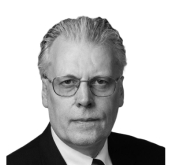

SACHS FLYTUR MAGNAÐA RÆÐU Í ÖRYGGISRÁÐI SÞ
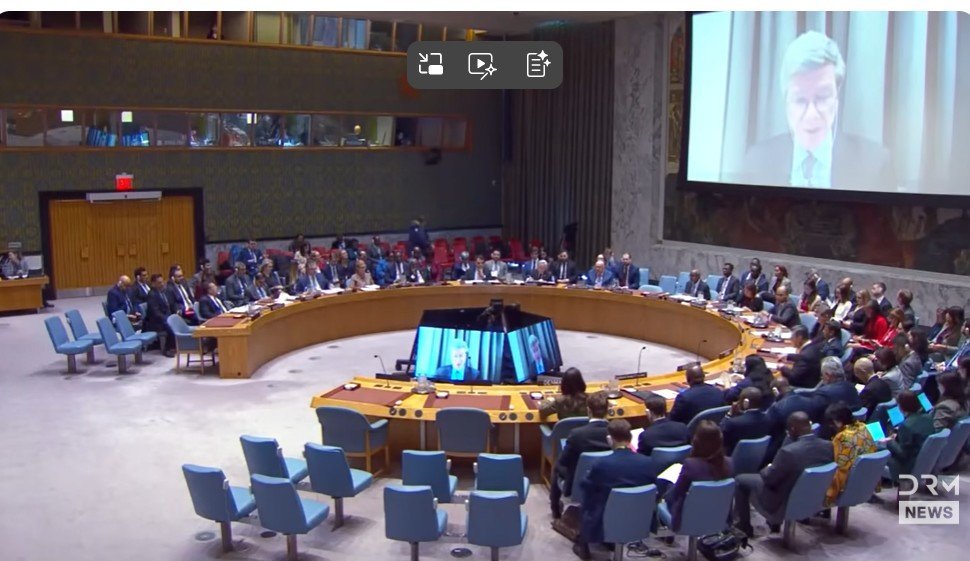
Í byrjun vikunnar kom bandaríski stjórnmálagreinandinn Jeffrey Sachs fyrir Öryggisráð Sameinuðu þjóðanna og flutti magnaða ræðu um ofbeldi af hálfu Bandaríkjamanna gegn Venezuela þegar forseta landsins var rænt í vopnuðu áhlaupi fyrir fáeinum dögum.
Sachs fjallar um valdarán BNA fyrr og síðar, nú á síðustu árum meðal annars í Sýrlandi, Líbíu, Hondúras og Úkraínu.
Ræðan er stutt, tæpar níu mínúntur en í henni rúmast ákveðinn kjarni í mannkynssögunni síðustu ár - kjarni sem allir verða að þekkja og ekki hleypa meðvirkum stjórnvöldum NATÓ ríkjanna - þar með talið Íslandi - upp með að þegja í hel.
Hér að neðan er ræða Jeffrey Sachs í töluðu máli en einnig texti ræðu hans:
|
Jeffrey D. Sachs: Briefing of the UN Security Council on Venezuela The issue before the Council today is not the character of the government of Venezuela. The issue is whether any Member State—by force, coercion, or economic strangulation—has the right to determine Venezuela’s political future or to exercise control over its affairs. This question goes directly to Article 2(4) of the United Nations Charter, which prohibits the threat or use of force against the territorial integrity or political independence of any state. The Council must decide whether that prohibition is to be upheld or abandoned. Background and context Since 1947,United States foreign policy has repeatedly employed force, covert action, and political manipulation to bring about regime change in other countries. This is a matter of carefully documented historical record. In her book Covert Regime Change (2018), political scientist Lindsey O’Rourke documents 70 attempted US regime-change operations between 1947 and 1989 alone. These practices did not end with the Cold War. Since 1989, major United States regime-change operations undertaken without authorization by the Security Council have included, among the most consequential: Iraq (2003), Libya (2011), Syria (from 2011), Honduras (2009), Ukraine (2014), and Venezuela (from 2002 onward). The methods employed are well established and well documented. They include open warfare; covert intelligence operations; instigation of unrest; support for armed groups; manipulation of mass and social media; bribery of military and civilian officials; targeted assassinations; false-flag operations; and economic warfare aimed at collapsing civilian life. These measures are illegal under the UN Charter, and they typically result is ongoing violence, lethal conflict, political instability, and deep suffering of the civilian population. The case of Venezuela In April 2002, the United States knew of and approved an attempted coup against the Venezuelan government. In the 2010s, the United States funded civil society groups actively engaged in anti-government protests, notably in 2014. When the government cracked down on the protests, the US followed with a series of sanctions. In 2015, President Barrack Obama declared Venezuela to be “an unusual and extraordinary threat to the national security and foreign policy of the United States.” In 2017, at a dinner with Latin American leaders on the margins of the UN General Assembly, President Trump openly discussed the option of the US invading Venezuela to overthrow the government. During 2017 to 2020, the US imposed sweeping sanctions on the state oil company. Oil production fell by 75 percent from 2016 to 2020, and real GDP per capita (PPP) declined by 62 percent. The UN General Assembly has repeatedly voted overwhelmingly against such unilateral coercive measures. Under international law, only the Security Council has the authority to impose such sanctions. On 23 January 2019, the United States unilaterally recognized Juan Guaidó as “interim president” of Venezuela and on 28 January 2019 froze approximately $7 billion of Venezuelan sovereign assets held abroad and gave Guaidó authority over certain assets. These actions form part of a continuous United States regime-change effort spanning more than two decades. Recent United States global escalation In the past year, the United States has carried out bombing operations in seven countries, none of which were authorized by the Security Council and none of which were undertaken in lawful self-defense under the Charter. The targeted countries include Iran, Iraq, Nigeria, Somalia, Syria, Yemen, and now Venezuela. What is at stake today Members of the Council are not called upon to judge Nicolás Maduro. They are not called upon to assess whether the recent United States attack and ongoing naval quarantine of Venezuela result in freedom or in subjugation. Members of the Council are called upon to defend international law, and specifically the United Nations Charter. The realist school of international relations, articulated most brilliantly by John Mearsheimer, accurately describes the condition of international anarchy as “the tragedy of great power politics.” Realism is therefore a description of geopolitics, not a solution for peace. Its own conclusion is that international anarchy leads to tragedy. In the aftermath of World War I, the League of Nations was created to end the tragedy through the application of international law. Yet the world’s leading nations failed to defend international law in the 1930s, leading to renewed global war. The United Nations emerged from that catastrophe as humanity’s second great effort to place international law above anarchy. In the words of the Charter, the UN was created “to save succeeding generations from the scourge of war, which twice in our lifetime has brought untold sorrow to mankind.” Given that we are in the nuclear age, failure cannot be repeated. Humanity would perish. There would be no third chance. Measures required of the Security Council To fulfill its responsibilities under the Charter, the Security Council should immediately affirm the following actions:
In Closing Mr. President, Distinguished Members, Peace and the survival of humanity depend on whether the United Nations Charter remains a living instrument of international law or is allowed to wither into irrelevance. That is the choice before this Council today. Thank you.
|
-----------------
Athygli er vakin á því að hægt er að gerast áskrifandi að fréttabréfi þessarar heimasíðu á slóð sem hér er að finna: https://www.ogmundur.is/
Fréttabréfið er sent aðeins endrum og eins til áskrifenda þeim að kostnaðarlausu að sjálfsögðu.
Here you can subscribe to a newsletter from this homepage, free of charge of course: https://www.ogmundur.is/
(Ábending: Margir þeirra sem hafa viljað skrá sig á útsendingarlista fréttabréfsins hafa orðið fyrir því að fá ekkert viðbragð eftir skráningu. Skýringin hefur oftar en ekki verið sú pósturinn hefur hafnað í ruslpósti. Fólk gæti að þessu.
To be taken note of: Sometimes people who have wanted to subscribe to the news-letter (by pressing skrá netfang and by then giving their e-mail, netfangið þitt) have not got any confirmation. Usually this is because the reply has been directed to the trash bin. Be aware of this.)